Owner · Tattoo Artist
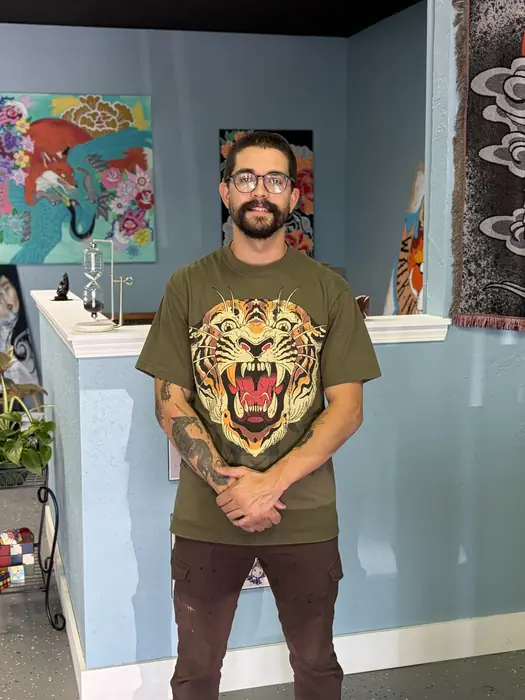
Dennis Corzo
Blackwork, Japanese & neo-Japanese
Blackwork fused with traditional Japanese and neo-Japanese structure — bold, dynamic, built to flow with the body.
Read Dennis’s bioSolid black, heavy contrast, and compositions built to read from across the room. Blackwork is the other half of what Blind Fox is known for, and Dennis’s work fuses it with traditional Japanese and neo-Japanese structure.
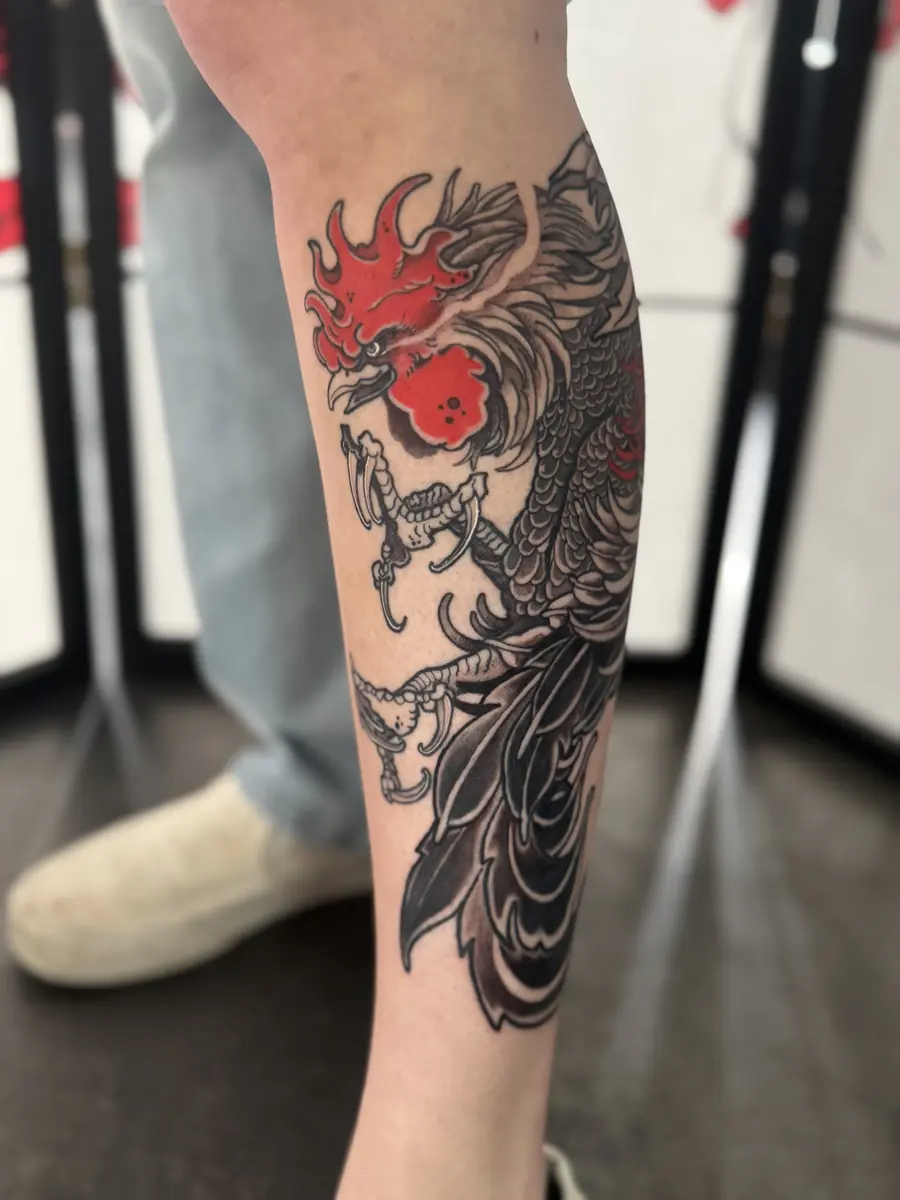
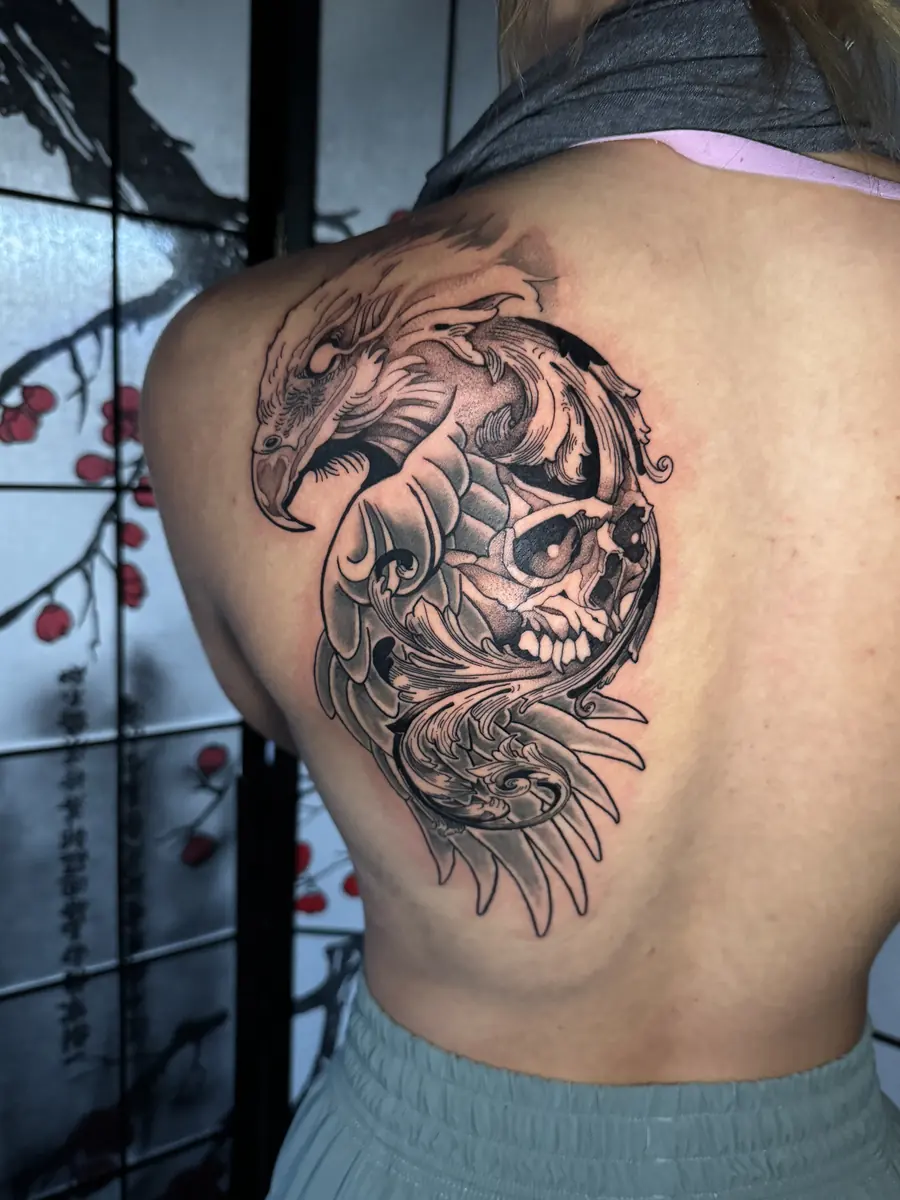
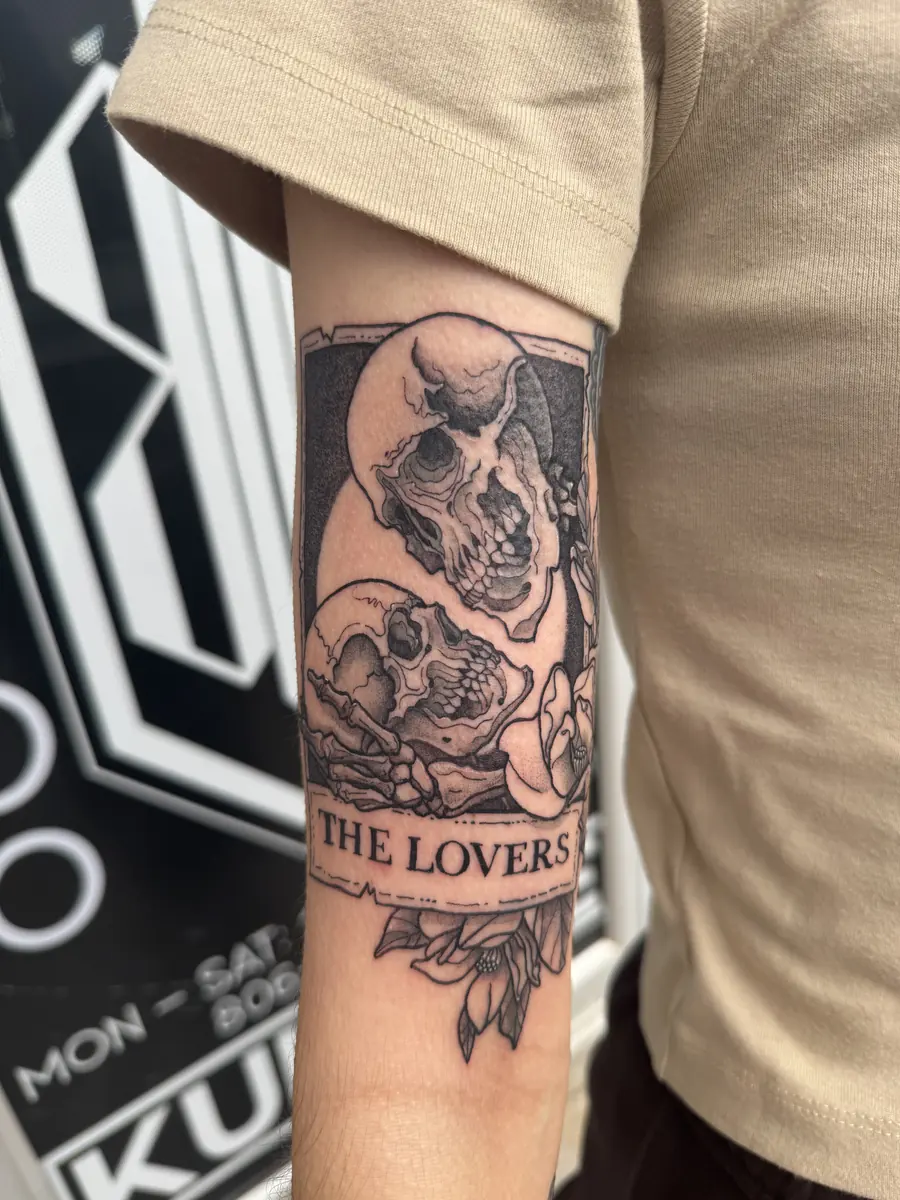
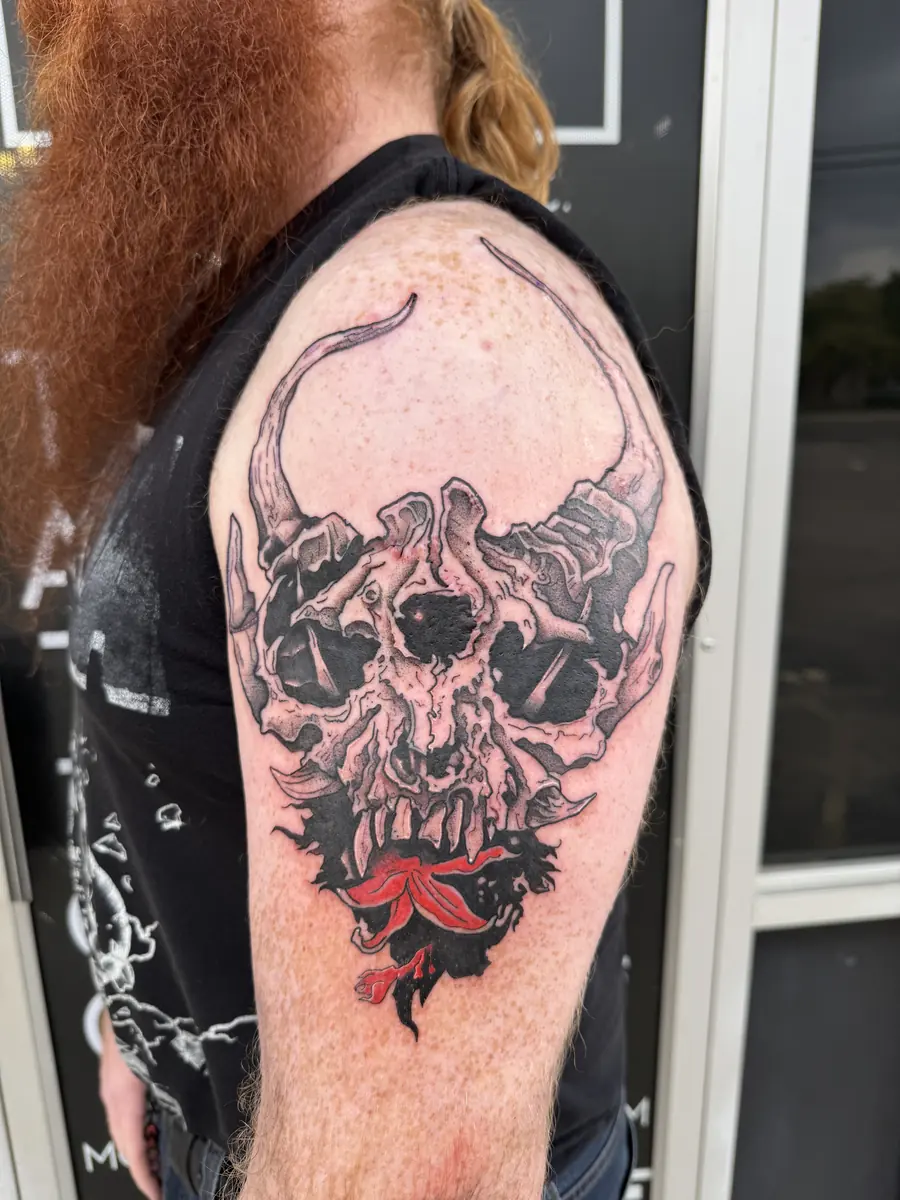
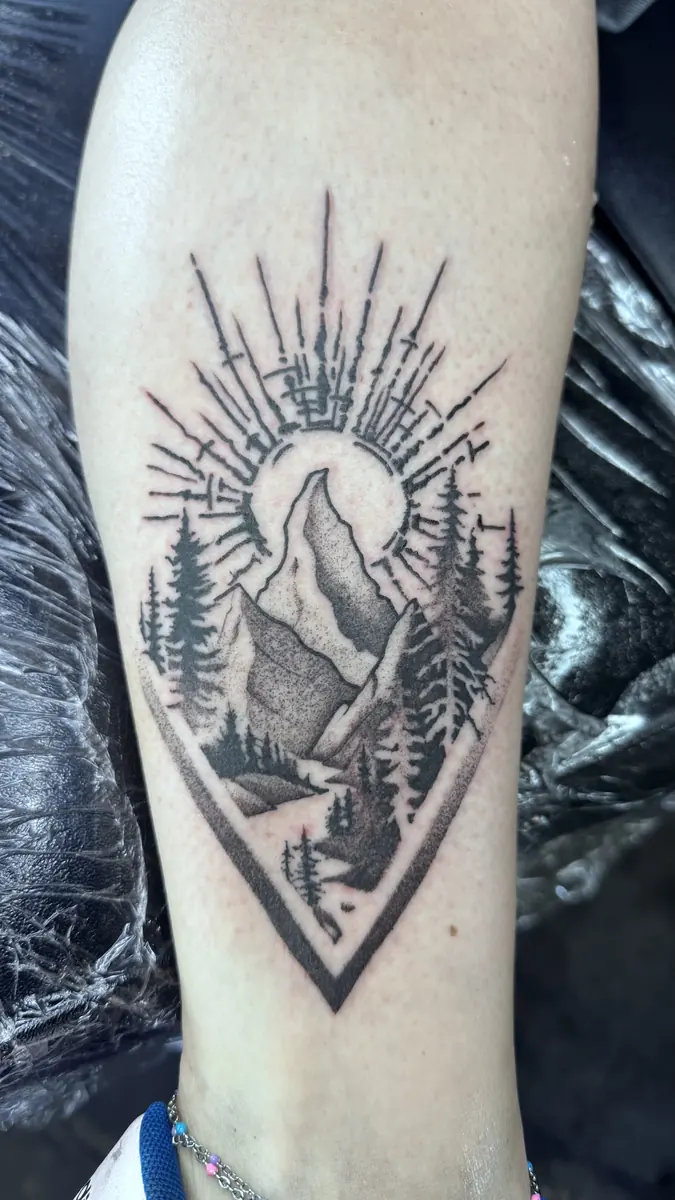
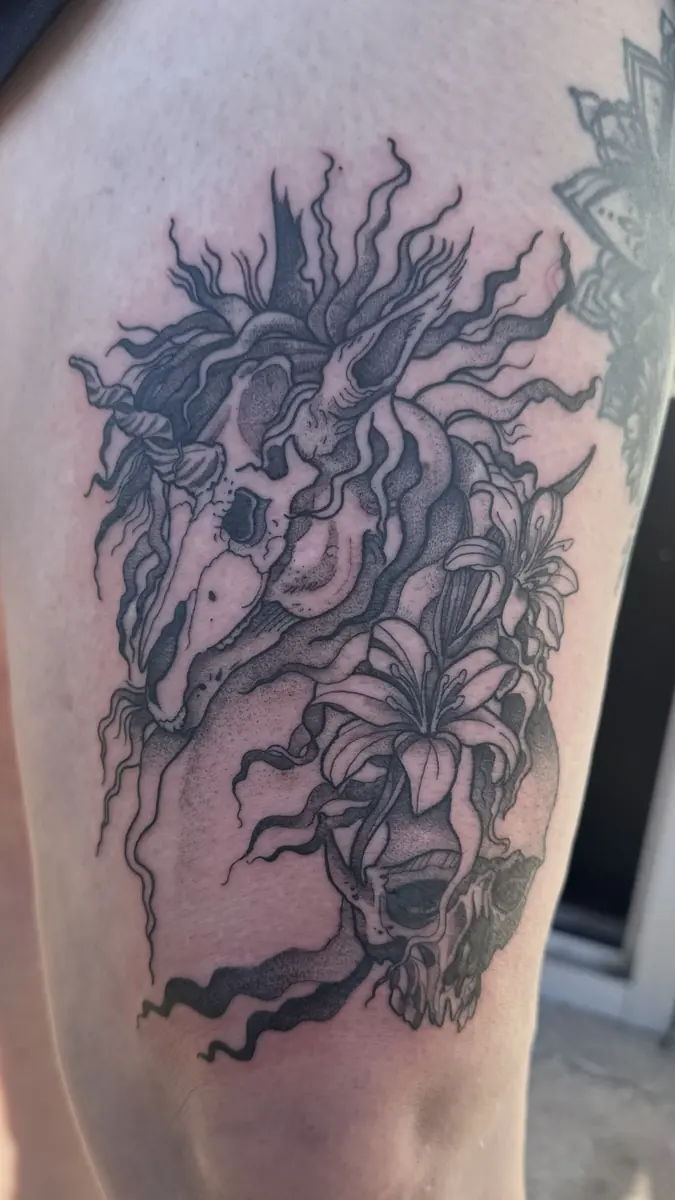
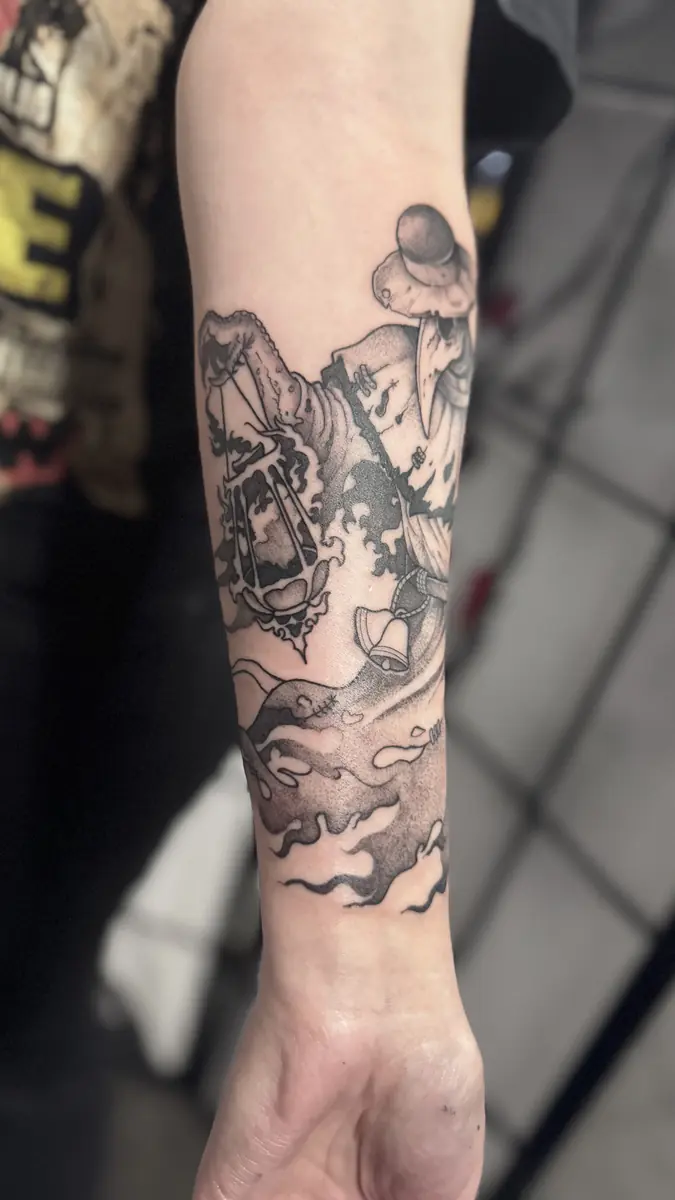
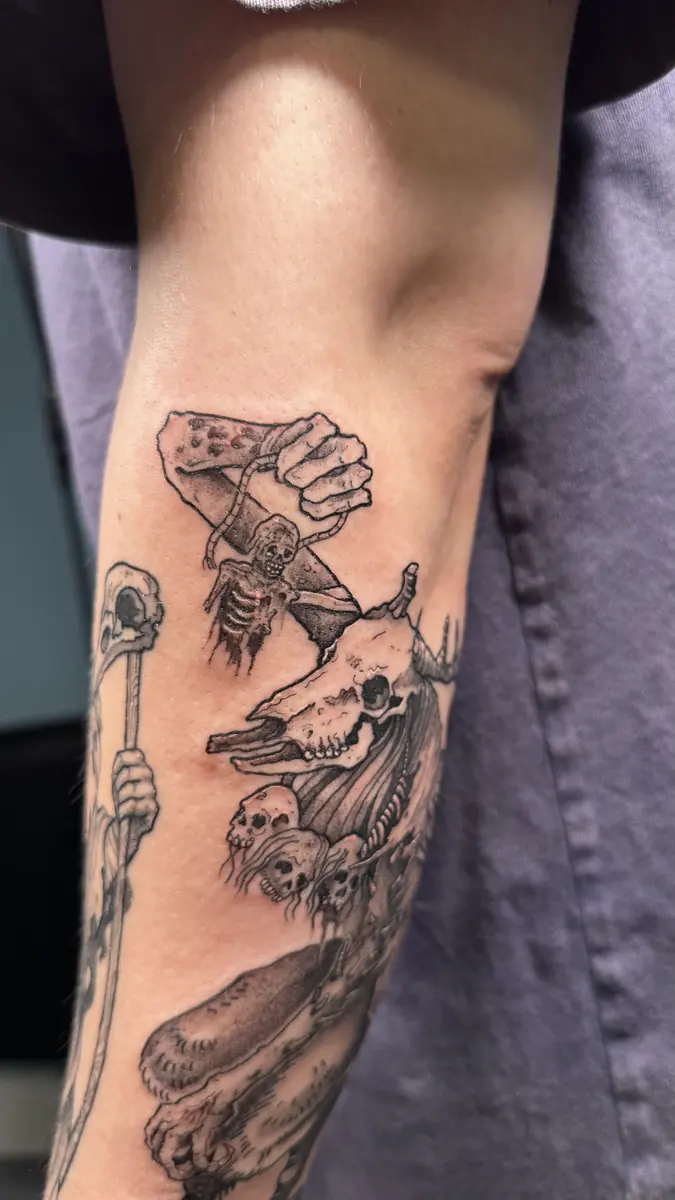
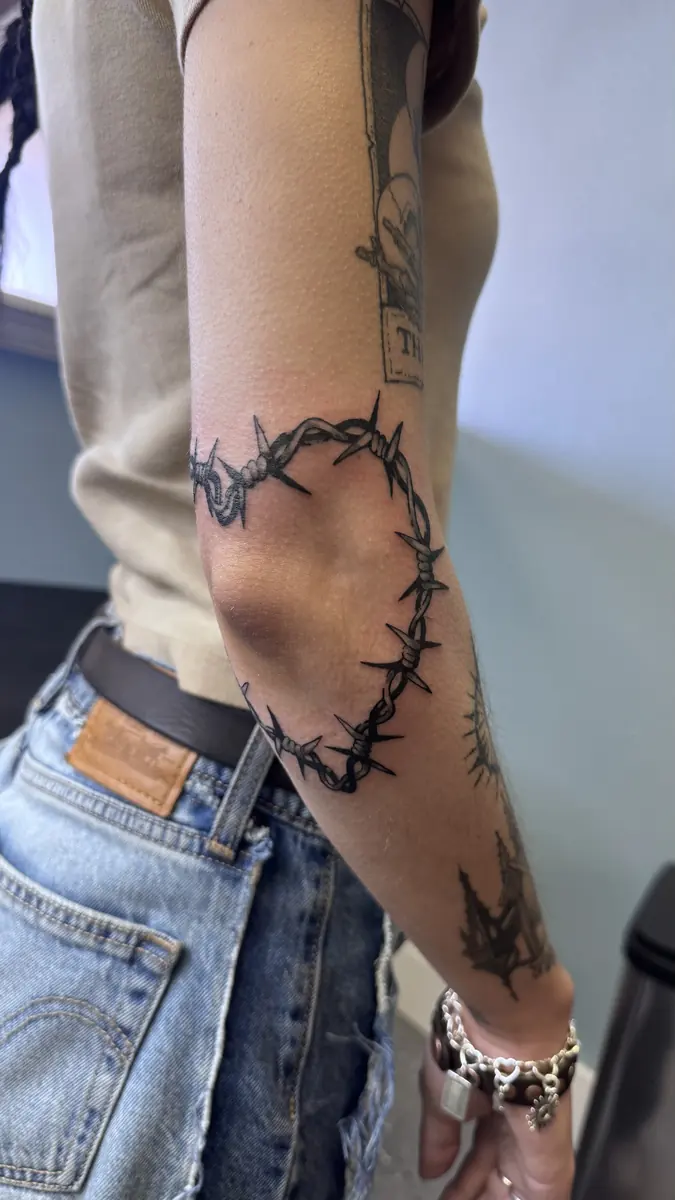
Every photo on this site is real work by Blind Fox artists. Galleries are grouped by style — ask us who tattooed a particular piece and we’ll tell you.
Blackwork is tattooing that takes all of its power from one ink. There is no color to lean on, so everything rests on shape, contrast and negative space — where the black goes, where the skin is left alone, and how your eye travels across the piece.
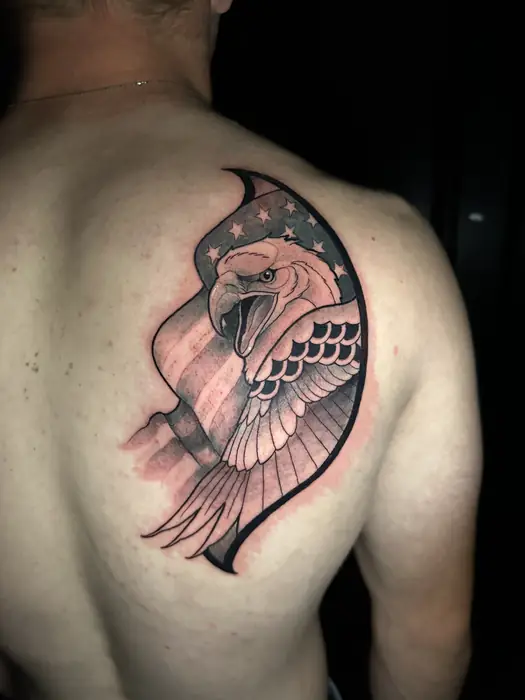
It covers more ground than people expect: bold illustrative linework, dense fields of solid black, dotwork and stipple shading, ornamental and geometric patterning, and heavy black-and-grey rendering held inside a hard black frame.
Because it isn't carrying delicate color, blackwork ages predictably. Well-packed black stays black. The part that has to be designed properly is the balance — which is the whole job, and the reason a blackwork piece is worth planning rather than improvising.
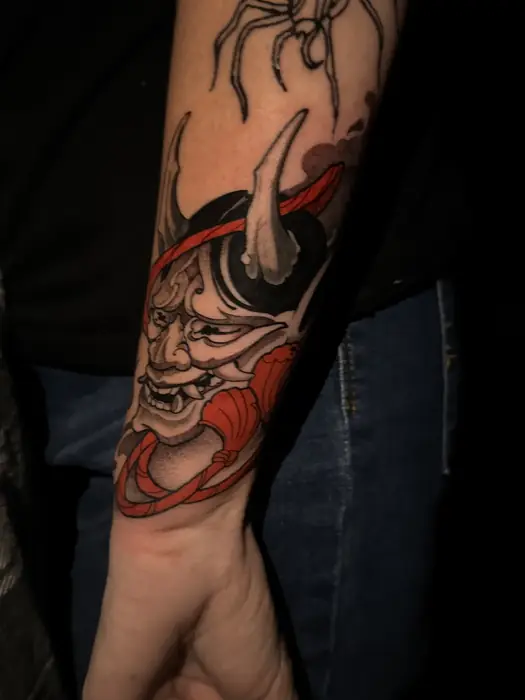
Dennis’s work is rooted in a fusion of blackwork, traditional Japanese and neo-Japanese tattooing, combined with inspiration drawn from European architecture, natural forms and organic movement — bold, dynamic compositions designed to flow naturally with the body.
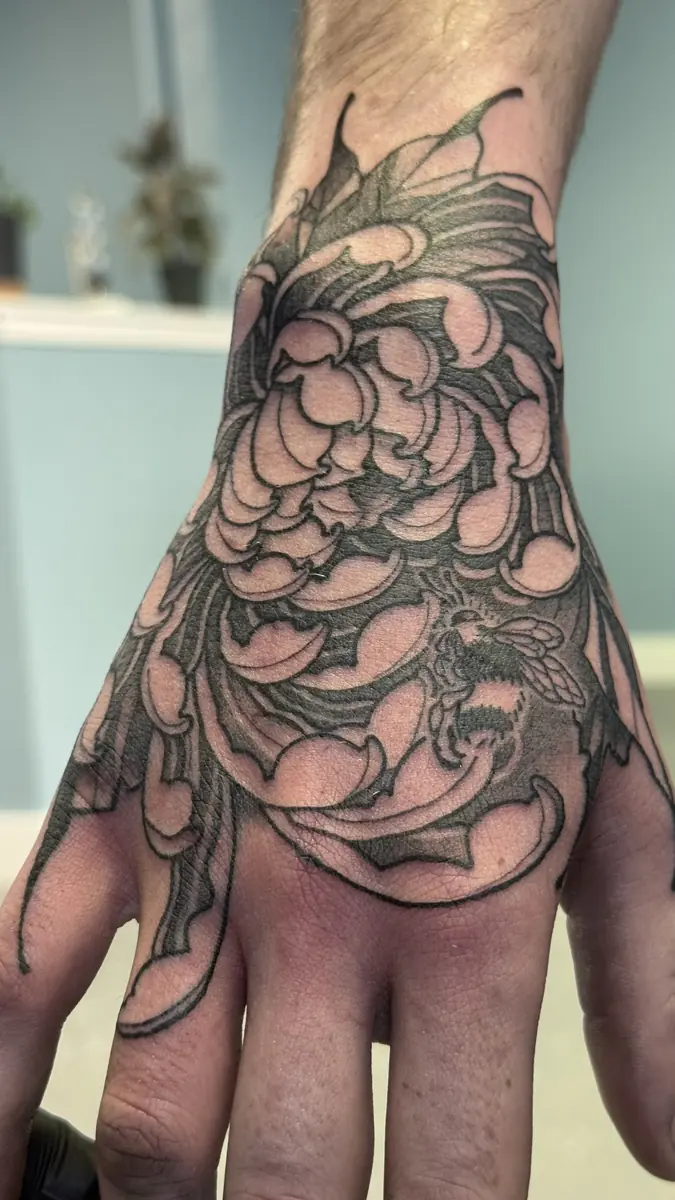
You can see it in the work on this page: hannya masks and coiled serpents, chrysanthemum across the back of a hand, cloud and wave shapes carrying a forearm, a mountain held inside a geometric frame, and the occasional single hit of red against all that black.
For Dennis every tattoo is a collaboration, and the goal is a custom piece that tells a story and carries meaning — not a design pulled off a shelf.
Blackwork rewards planning more than any other style here. Panels that wrap a limb, backs, chests, hands and full sleeves all need the composition mapped before the first line goes in. Large work is booked across sessions, and at your consultation we'll lay out a realistic plan — including what to tattoo first, so the piece looks intentional even while it is still in progress.
The thing that separates a blackwork piece that works from one that doesn't is negative space. Skin left untouched is not empty — it is the lightest value in the tattoo, and it does the same job white paint does in a drawing. Get the ratio right and a piece reads instantly from ten feet away. Get it wrong and you have a dark patch that people can't parse until they're standing uncomfortably close.
Reading distance is worth deciding on purpose. A hand or neck piece is seen up close and in motion, so it wants clear silhouettes and a little breathing room. A back or a leg sleeve is seen from across a room, so it can carry far more internal detail as long as the big shapes hold. Most blackwork that disappoints people was drawn at the wrong distance — beautiful on a tablet at arm's length, unreadable on an actual arm.
Then there's how the piece meets the body. Blackwork edges are hard by definition, so where the black stops matters: a panel that ends in a clean, intentional line looks designed, while one that just runs out of steam looks unfinished. Wrapping a limb properly means checking the drawing on the body from several angles before a needle touches it — which is why stencil day on a big piece takes as long as it does.
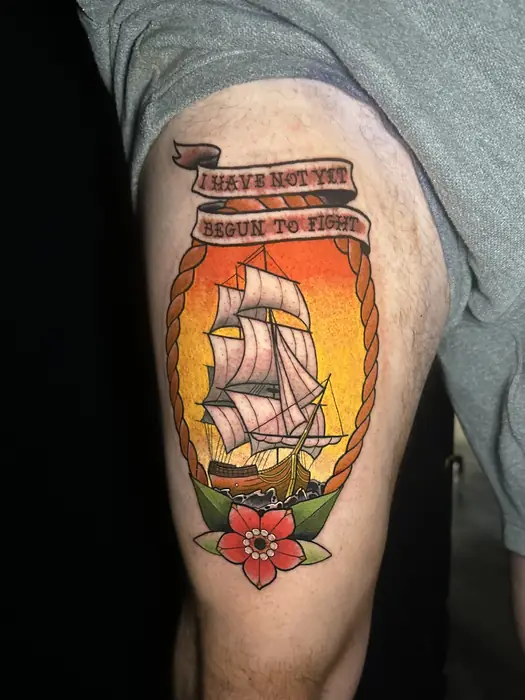
Most clients book a specific artist. Call and we’ll match your idea to the right hand.
Large areas of solid black mean more time under the needle and more saturation passes, so it's usually a question of endurance rather than sharper pain. Ribs, sternum, hands, feet and the inside of the arm are tender on anyone, whatever the style. Long sittings get broken up — there's no prize for suffering through one marathon session.
Black is the most stable pigment in tattooing, and well-packed black holds for decades. It softens at the edges over the years, which is normal. Patchy saturation or a blown line is a technique problem rather than a style problem — if a spot heals light, come back and we'll touch it up.
It's the most reliable cover-up there is — solid black will cover almost anything. The honest trade-off is that a true blackout leaves you with black rather than a new picture. There's usually a middle path that reworks the old piece into a new composition, and that's worth talking through at a free consult before you decide.
Honestly, less easily than most tattoos — dense black is the hardest thing for a laser to break up, and it takes many sessions. That's not a reason to avoid blackwork; it is a reason to design it properly the first time and to be sure about placement before you commit. If you're not certain, start with a smaller panel rather than a sleeve.
Call the shop, tell us what you have in mind, and we’ll book you a free consultation. Mon–Sat · 12–8 PM.