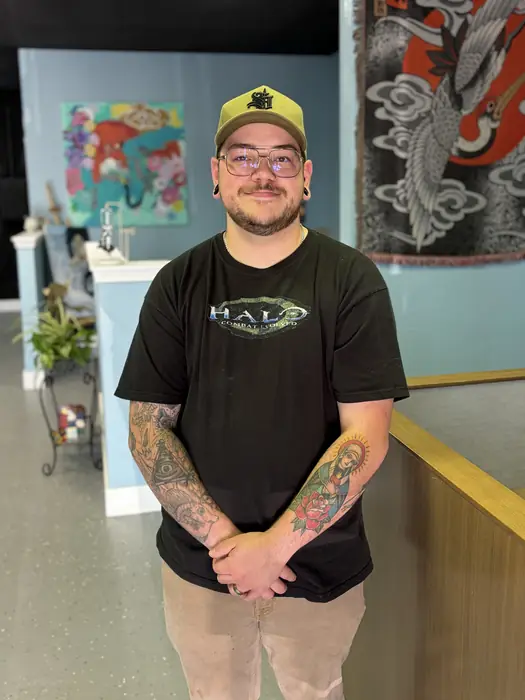
Owner · Tattoo Artist
Braydon
Neo-traditional & traditional
Colour-forward neo-traditional — flora, fauna and custom concepts, built on traditional fundamentals.
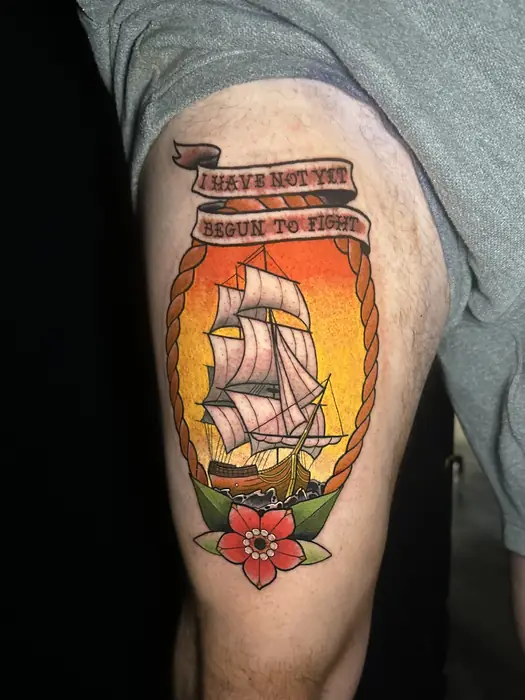
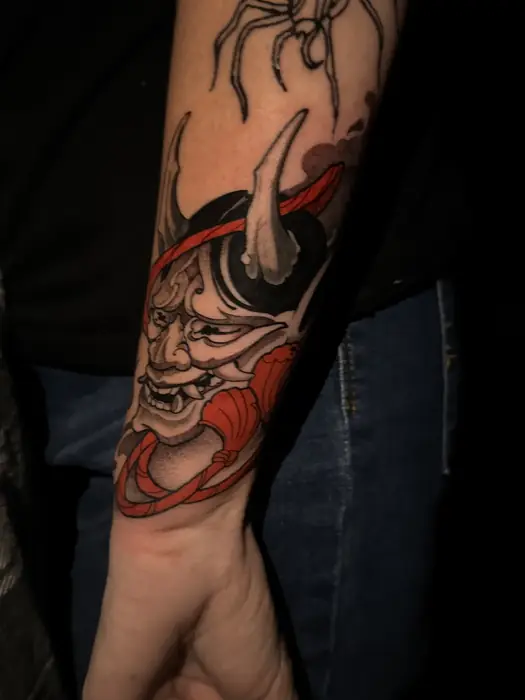
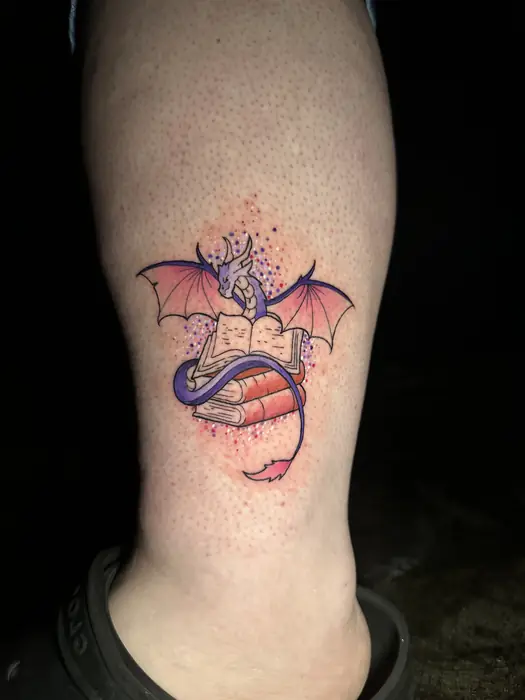
Read Braydon’s bioTraditional bones, modern range. Neo-traditional is what Blind Fox is best known for: bold, readable outlines and solid color, opened up with deeper palettes, painterly shading, and subjects drawn from scratch for the person wearing them.
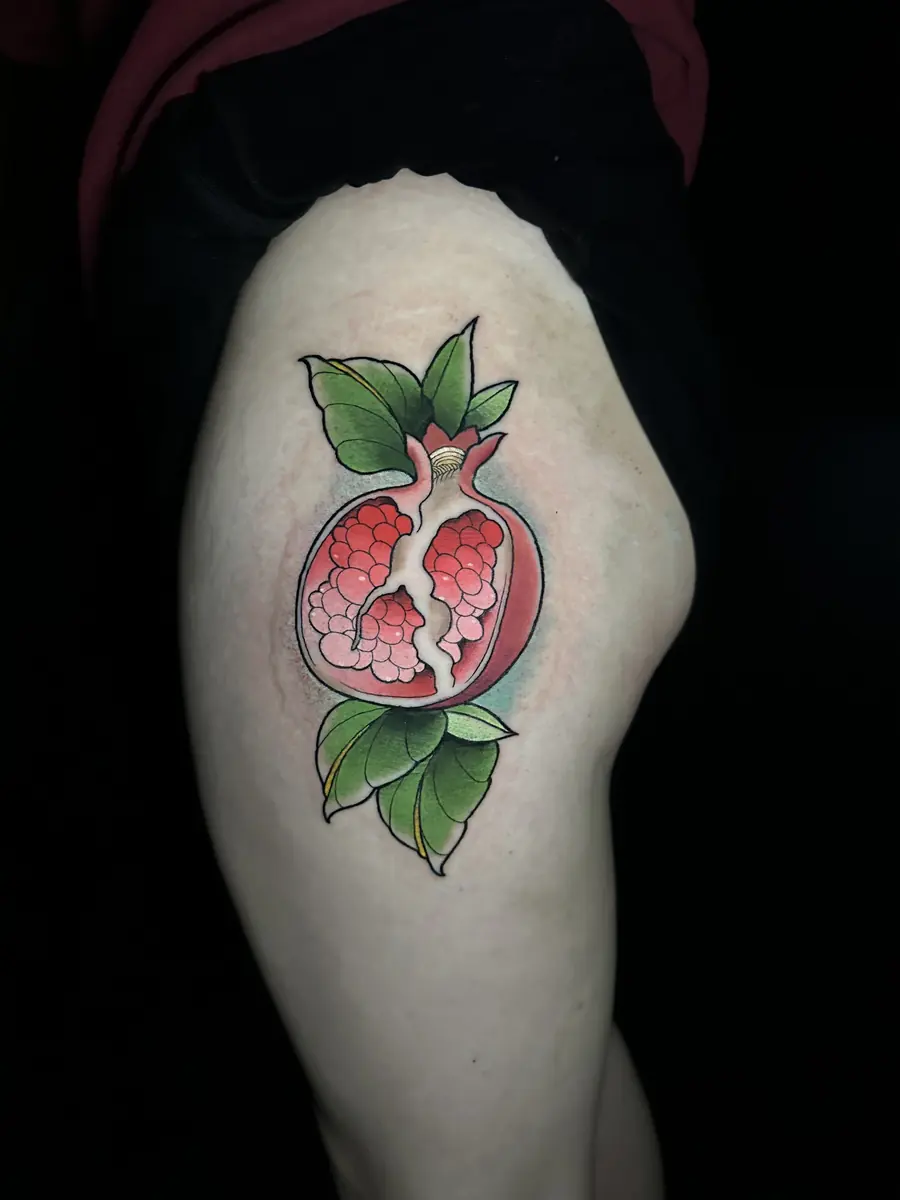
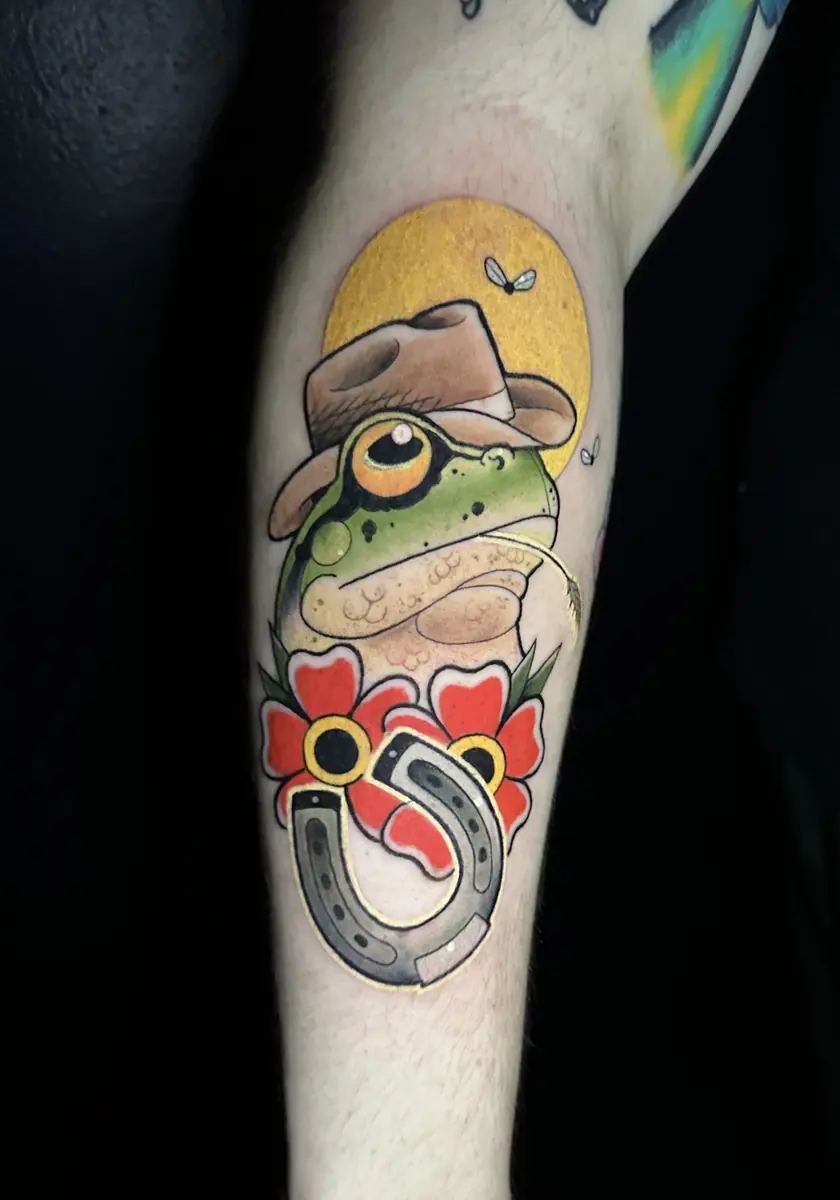
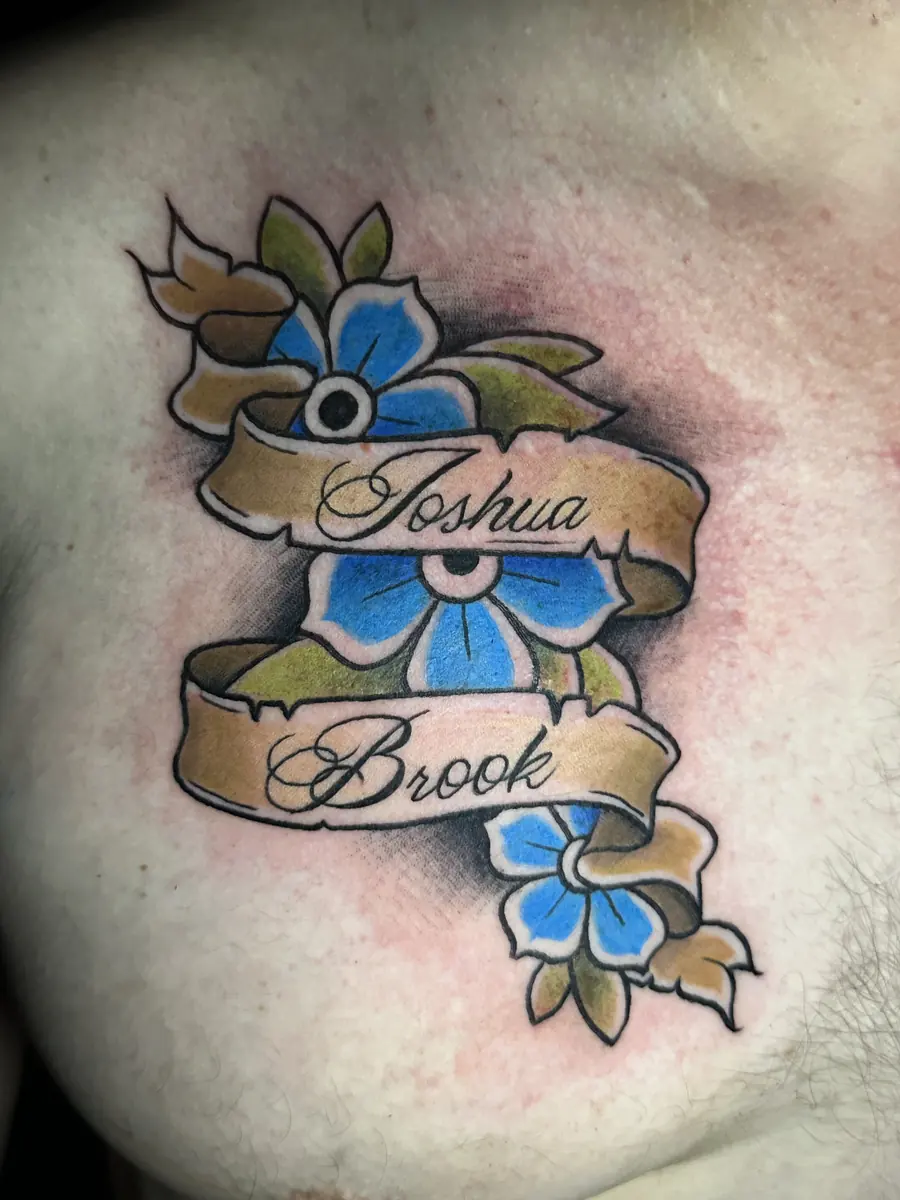
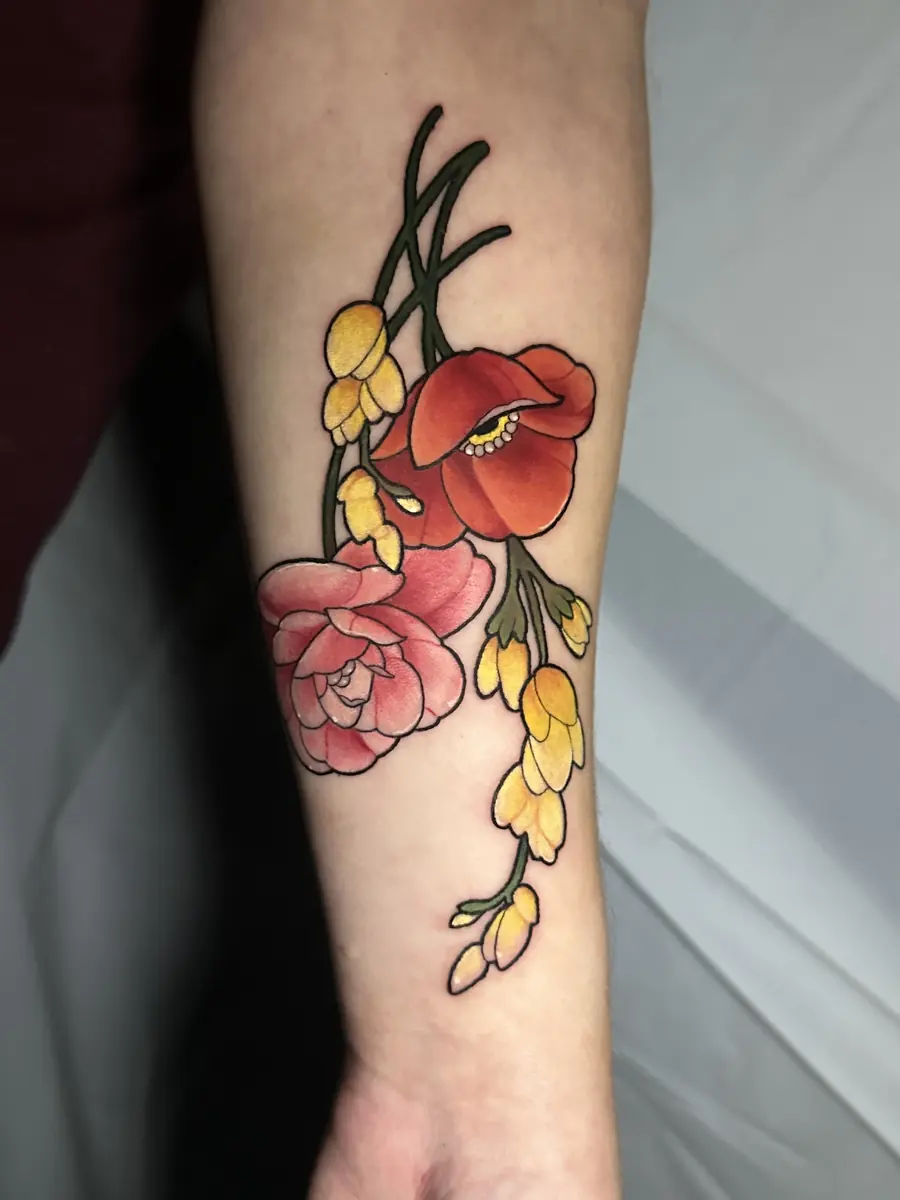
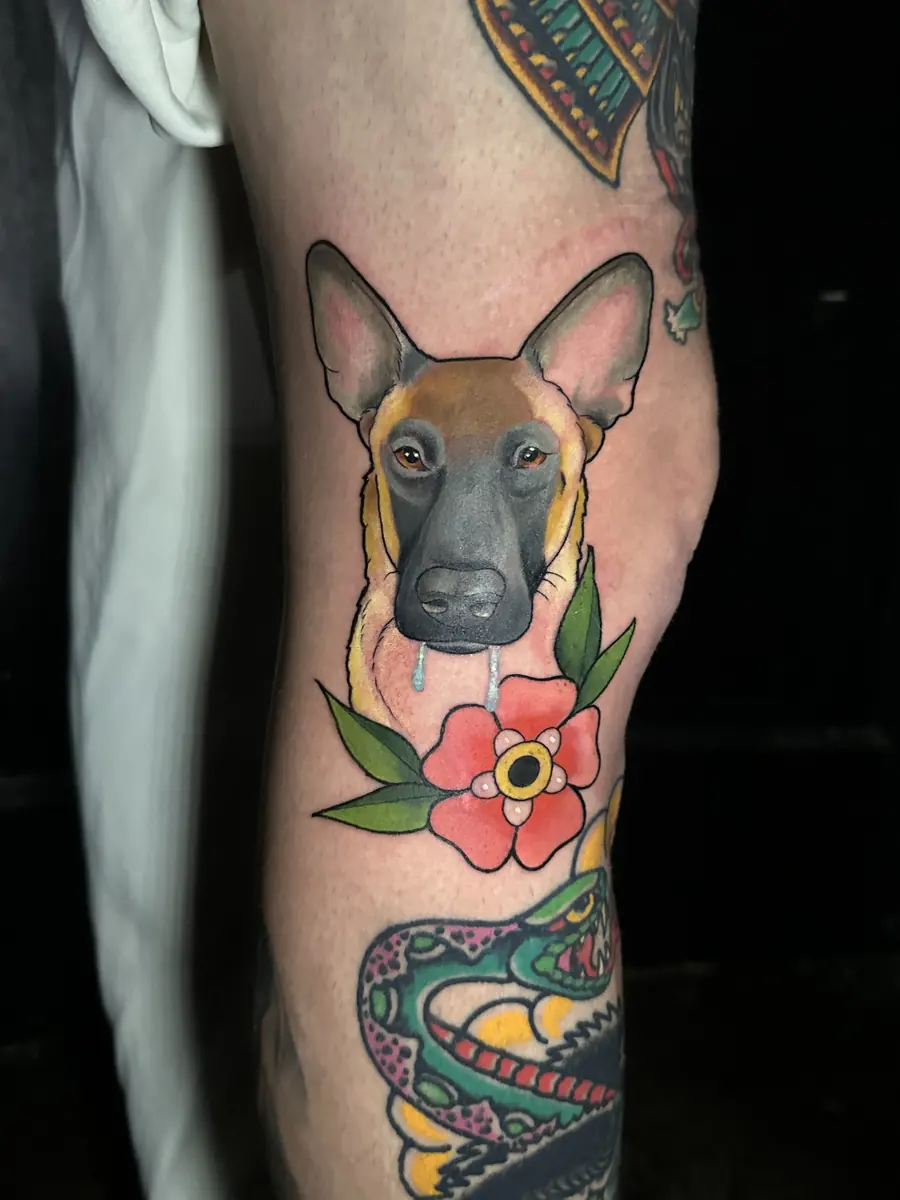
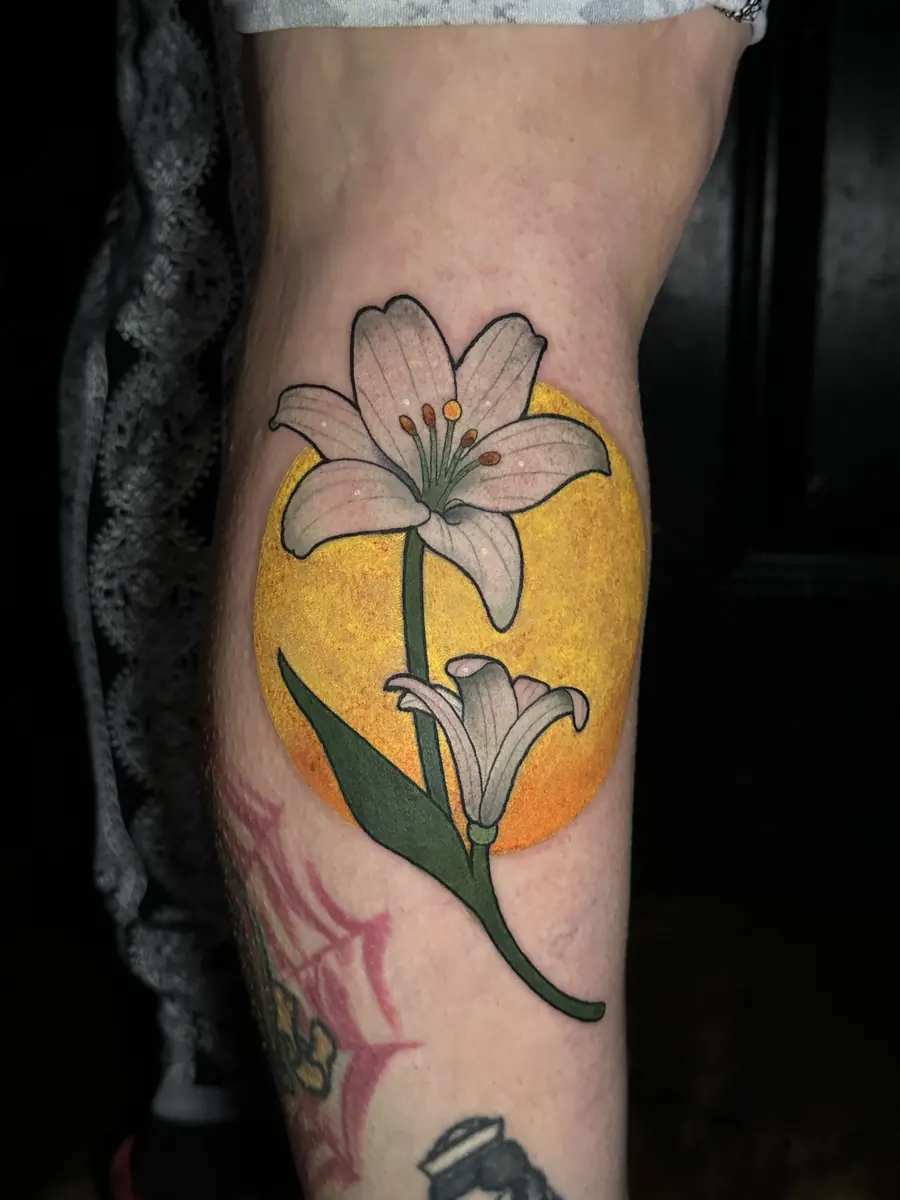
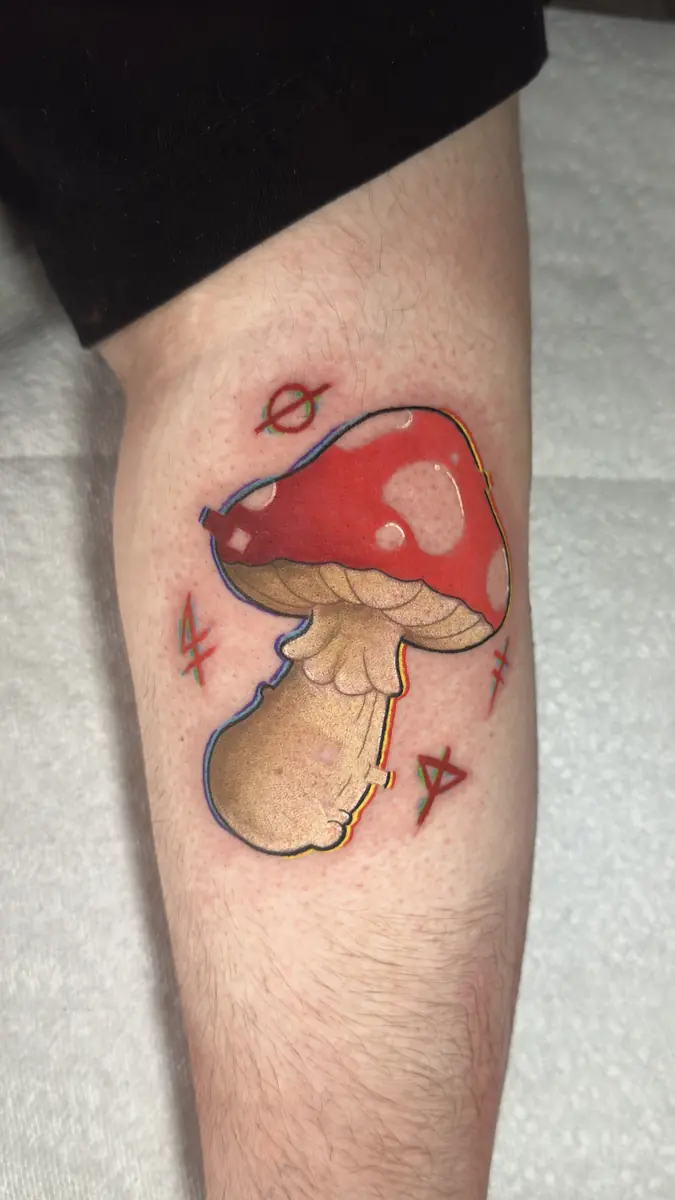
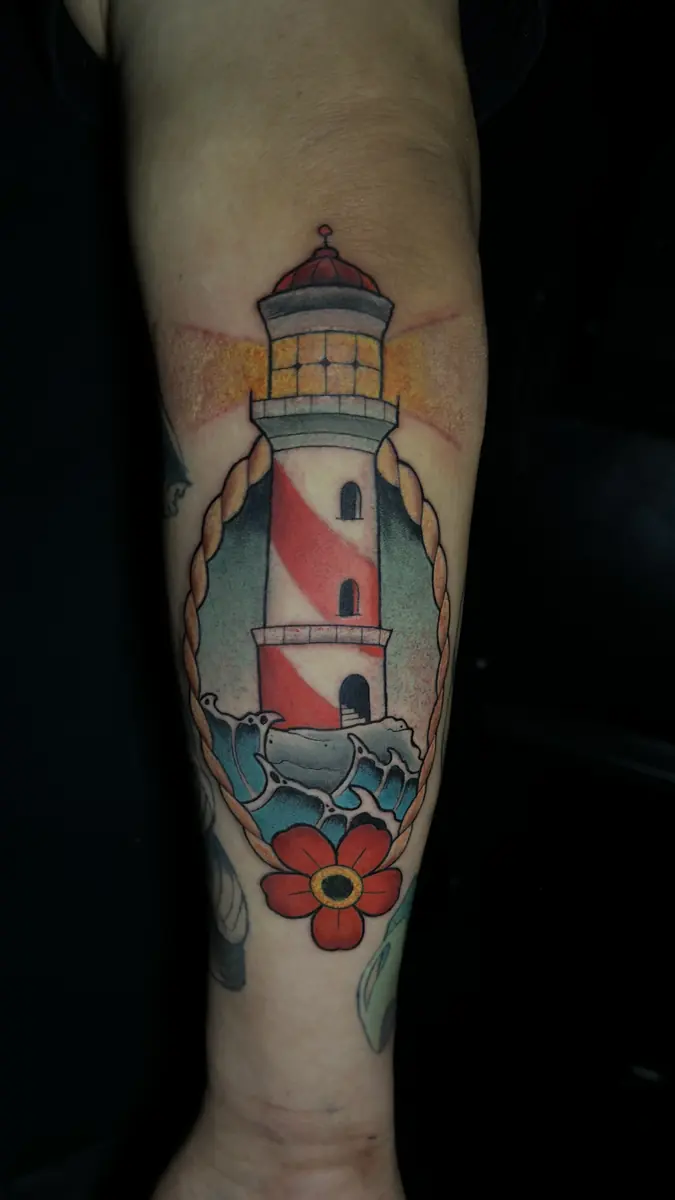
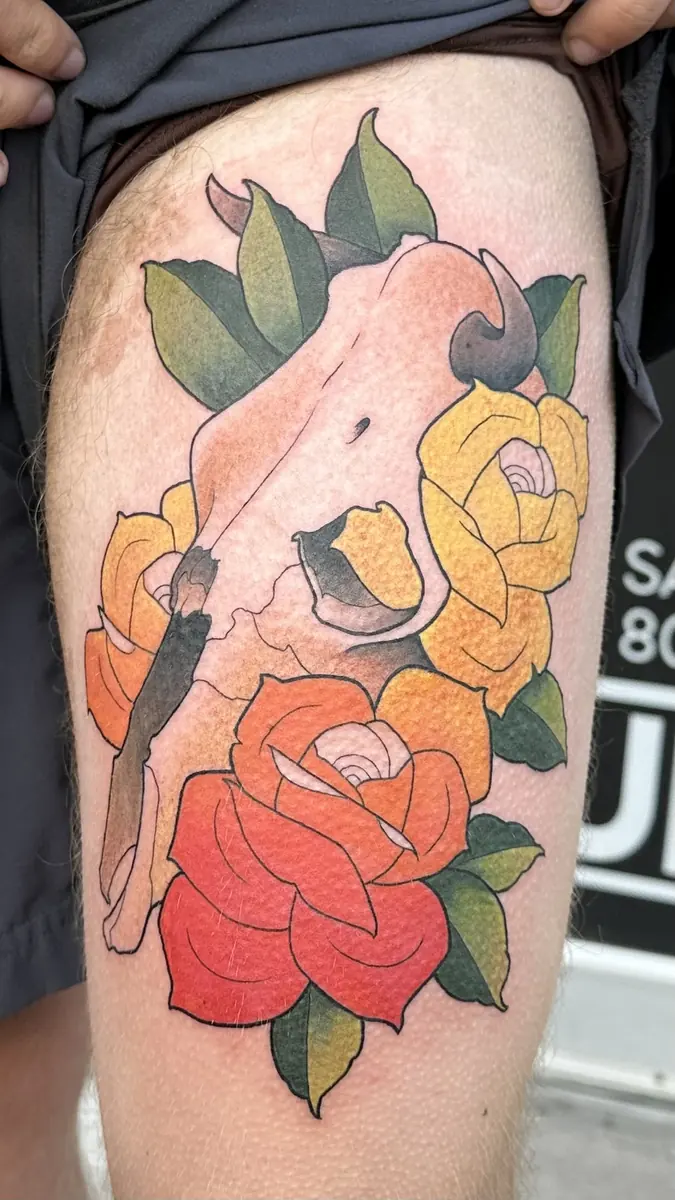
Every photo on this site is real work by Blind Fox artists. Galleries are grouped by style — ask us who tattooed a particular piece and we’ll tell you.
Neo-traditional grew straight out of American traditional tattooing. It keeps the two things that make a traditional tattoo last — a confident outline and solid, saturated color — and then widens everything else. The palette gets deeper and more layered. The shading turns painterly instead of flat. Subjects gain detail, dimension and ornament: a rose becomes a specific rose, an animal gets a personality, a frame picks up Art Nouveau curves.
What it is not is realism. A neo-traditional piece is still a drawing — still stylized, still outlined. That is deliberate. It is exactly what lets the tattoo read clearly from across the room on day one and still read clearly in twenty years.
Almost all of our neo-traditional work is custom. You bring the subject, the placement and whatever references matter to you, and the piece gets drawn for your body rather than resized off a wall.
Braydon works most in neo-traditional, and that take pulls from well outside tattooing: the light and drama of Baroque painters like Caravaggio and Rembrandt, the flowing line and ornament of Alphonse Mucha and Art Nouveau, and the geometry of the Art Deco movement that followed — all woven together with the fundamentals of traditional tattooing.
Flora and fauna are the center of gravity — plants and animals are what Braydon most enjoys drawing and tattooing, and references come home from the mountains and the ranch rather than off a search engine.
Design starts at a free consultation: subject, placement, size, color direction, and how the piece should sit and flow on the body. Larger work gets mapped to follow the limb instead of fighting it, so a piece you add to later still looks like one composition.
Florals and botanicals. Animals and pet portraits. Ornamental frames, banners and name pieces. Memorial work where the subject needs to carry weight. And cover-ups — the density of solid color behind a bold outline makes neo-traditional one of the more forgiving styles for putting something you love over something you don't.
Color is the first thing people ask about and the thing most worth understanding. Saturated mid-tones — reds, deep yellows, olive, teal, warm browns — are the backbone of neo-traditional because they stay readable as skin changes. Very light pastels and pure white highlights are the most delicate marks in any color piece; used as accents over a solid drawing they're fine, used as the structure of the tattoo they aren't. That's a design decision we make together, up front, rather than something you discover in ten years.
Placement gets the same treatment. A neo-traditional piece is usually built around one subject with an ornamental frame or background, so it needs a shape to live in: the outer arm, the thigh, the calf, the forearm, the shoulder cap, the chest panel. Those areas have the room and the flat-to-gently-curved surface the composition wants. Places that bend, stretch and rub hard — the inner elbow, the back of the knee, hands and fingers — will always be more work to keep looking sharp, and we'll say so before you book rather than after.
Bigger pieces are planned so they can grow. If there's any chance a thigh piece becomes a leg sleeve or a shoulder becomes a half sleeve, saying that at the consultation costs nothing and changes how the first piece is drawn. Retrofitting a composition around a tattoo that wasn't designed for it is the most common reason a collection ends up looking like a collection of stickers instead of one body of work.
Most clients book a specific artist. Call and we’ll match your idea to the right hand.
About as well as tattooing gets, and for the same reason traditional work does: a strong outline and saturated color hold their shape as skin changes. The first things to soften over decades are fine detail and the lightest tones, so we build a value structure that still reads once that detail settles. Sun exposure and aftercare will affect how it ages more than the style does.
Often, yes — solid color and bold linework hide a lot. What's actually possible depends on how dark, how large and how saturated the existing piece is. Bring a photo, or the tattoo itself, to a free consultation and you'll get a straight answer about what will and won't work before you commit to anything.
Reference images — including examples of what you don't want, which is just as useful — plus the placement, a rough size, and any hard requirements: colors to include or avoid, scars, existing tattoos nearby. Consultations are free. Booking the appointment takes a $100 deposit per tattoo.
Neo-traditional keeps a visible outline and stylizes the subject; illustrative drops some of those traditional rules for a looser, more sketch-like or graphic-novel look; realism drops the outline entirely and imitates a photograph. Neo-traditional is the most durable of the three because the outline and the solid color carry the image even after fine detail softens. We work across all three — the question at your consult is which one actually suits the subject you have in mind.
Call the shop, tell us what you have in mind, and we’ll book you a free consultation. Mon–Sat · 12–8 PM.