Owner · Tattoo Artist
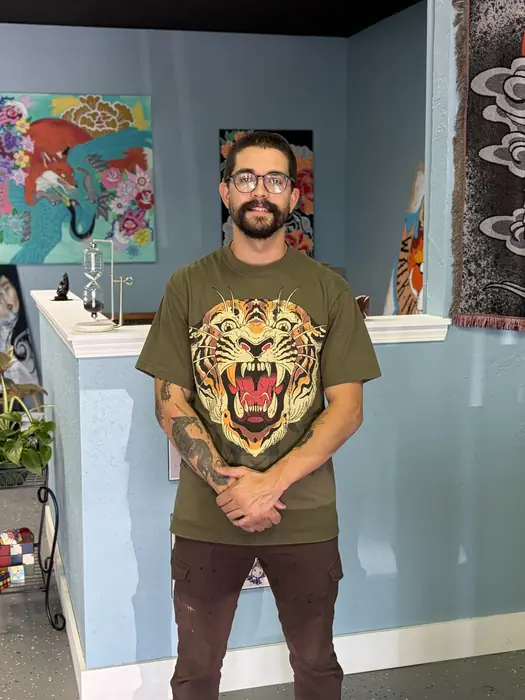
Dennis Corzo
Blackwork, Japanese & neo-Japanese
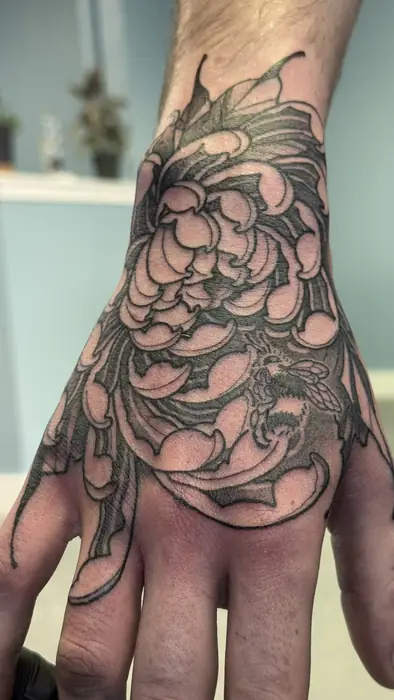
Blackwork fused with traditional Japanese and neo-Japanese structure — bold, dynamic, built to flow with the body.
Read Dennis’s bioJapanese tattooing is the oldest continuous body of design in the craft, and the one most concerned with how a tattoo sits on a whole body. Dennis’s work is rooted in a fusion of blackwork, traditional Japanese and neo-Japanese tattooing.
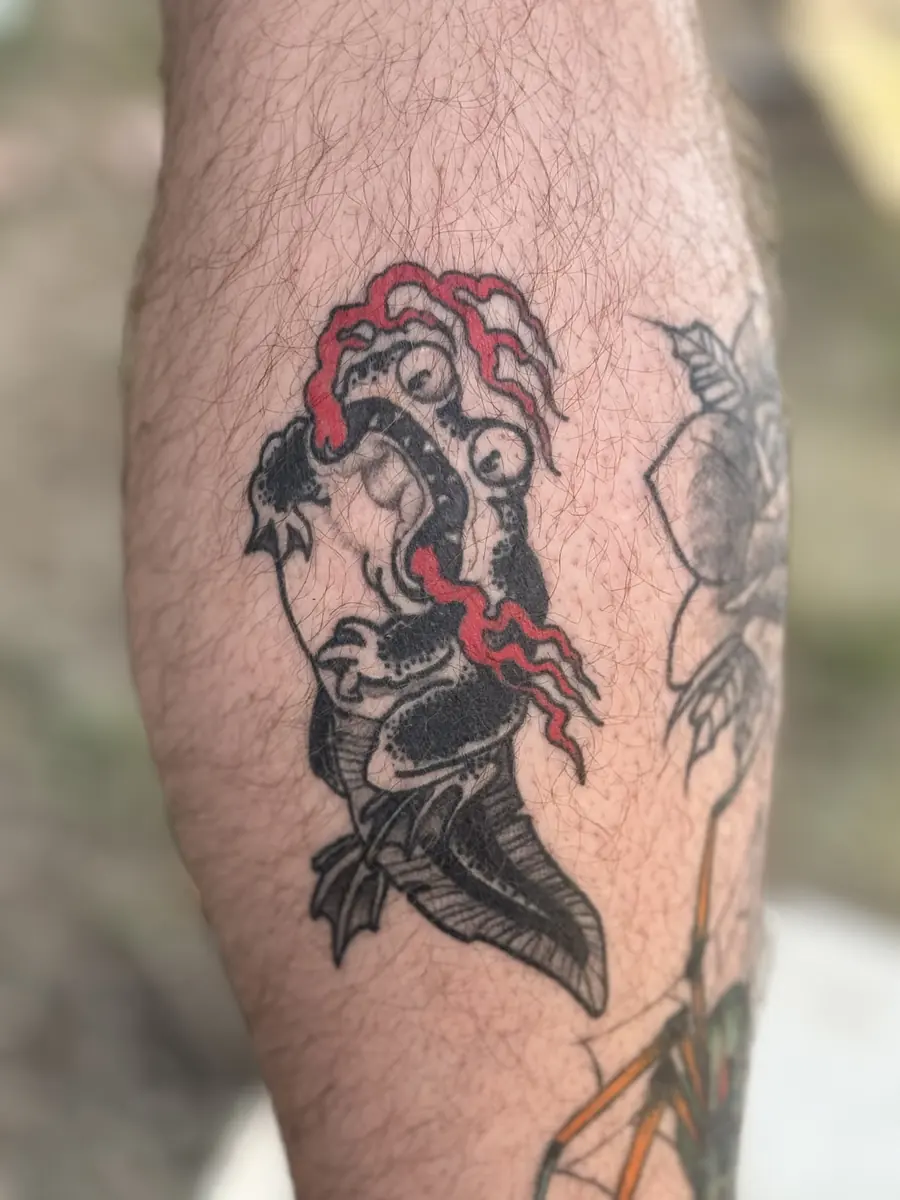
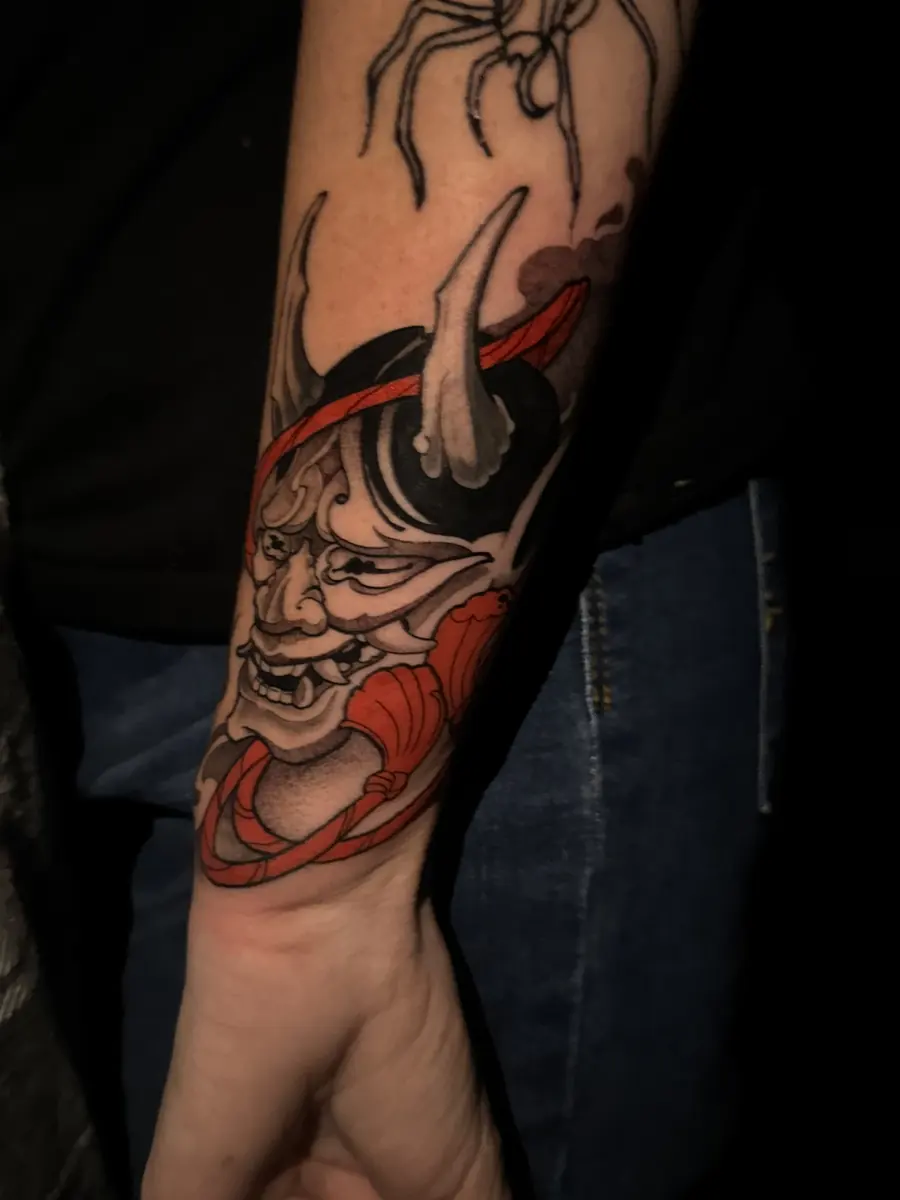
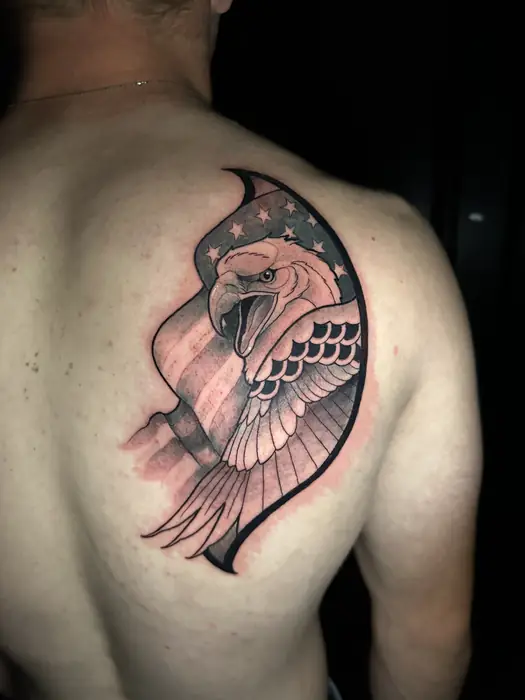
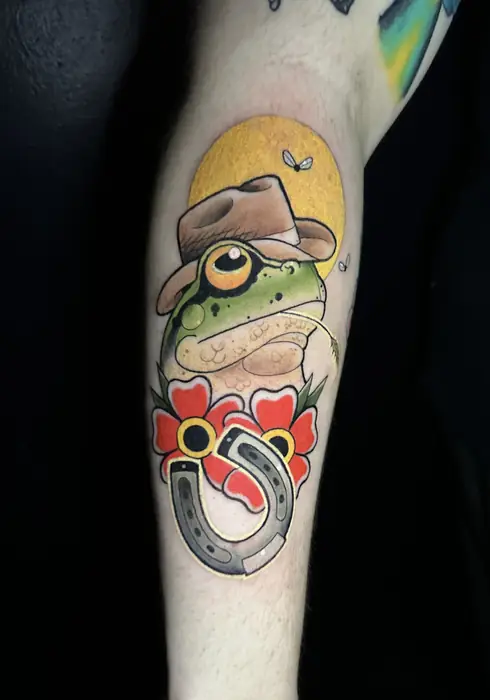
Every photo on this site is real work by Blind Fox artists. Galleries are grouped by style — ask us who tattooed a particular piece and we’ll tell you.
Traditional Japanese tattooing is a system, not just a set of subjects. A main subject — a dragon, a koi, a hannya mask, a tiger, a snake, a season's flower — is set into a background of wind bars, water, clouds or smoke that carries it across the body. The flowers tell you the season. The composition has an orientation: which way the piece faces, which way the water moves, how the whole thing wraps a sleeve or a back.
That background is why Japanese work looks so settled on the body. It's designed to follow muscle and limb rather than sit on top of them like a sticker.
Neo-Japanese keeps the structure and modernizes the rendering: bolder graphic shapes, a tighter palette, sharper blacks, and often a single accent color doing the job a full palette used to do.
Dennis fuses blackwork with traditional Japanese and neo-Japanese tattooing, drawing additional inspiration from European architecture, natural forms and organic movement. The result is bold, dynamic composition designed to flow naturally with the body — which is exactly what this style asks for.
Planning a large Japanese piece starts with the overall shape, before any single element. Sleeves and back pieces are mapped in advance and tattooed across sessions, so every sitting adds to a composition that was designed complete from the start.
If you want a traditional subject, we'll talk through what it carries — koi and perseverance, dragons and protection, the hannya mask and transformed emotion — so what you wear means what you think it means. If you'd rather bend the tradition, that's fine too, and you'll get a straight opinion about where a change works and where it fights the design language.
Once you know what you're looking at, a Japanese piece stops being decoration and starts being a sentence. The main subject sits at the focal point of the limb — usually the outer arm or the shoulder — facing a direction chosen on purpose. Around it, the background does the connective work: wind bars for air and motion, water for flow and struggle, clouds for distance, smoke and fire for energy. Those elements are what let a piece wrap a limb without looking like separate tattoos stacked on top of each other.
Flowers are the calendar. Cherry blossom for spring and impermanence, peony for summer and prosperity, chrysanthemum for autumn and long life, maple for the turn of the year. Pairing a subject with the wrong season isn't an error anyone will arrest you for, but getting it right is free, and it makes the piece coherent to anyone who knows the language.
Scale is the last piece of it. Traditional Japanese design assumes a large canvas — the background needs room to move, and a sleeve or a back panel is where the style is most at home. That doesn't mean you have to start big: a single well-composed panel on a forearm or a calf can be drawn as a complete idea, and drawn so that it could later become the foreground of something larger if you want it to.
Most clients book a specific artist. Call and we’ll match your idea to the right hand.
No. Plenty of Japanese work lives happily as a single panel — a forearm, a calf, a thigh. But if a sleeve is somewhere you might end up, say so at the first consult: a panel designed with that in mind is far easier to grow into than one that has to be worked around later.
It depends on the size, the detail and how you heal, and anyone who quotes you a number sight-unseen is guessing. You'll get a realistic session plan at your free consultation, along with what each stage will cost.
Often, yes — the dense backgrounds are genuinely useful for absorbing older pieces into a bigger composition, which is one of the reasons the style has lasted. Bring photos of what you've got.
Subject first, almost always. The main element sets the scale, the orientation and the focal point, and the background is then drawn to serve it. Tattooing background first locks you into a composition before the important part exists. On multi-session work we'll usually outline the full composition early so every sitting is adding to a plan rather than improvising around what's already healed.
Call the shop, tell us what you have in mind, and we’ll book you a free consultation. Mon–Sat · 12–8 PM.